
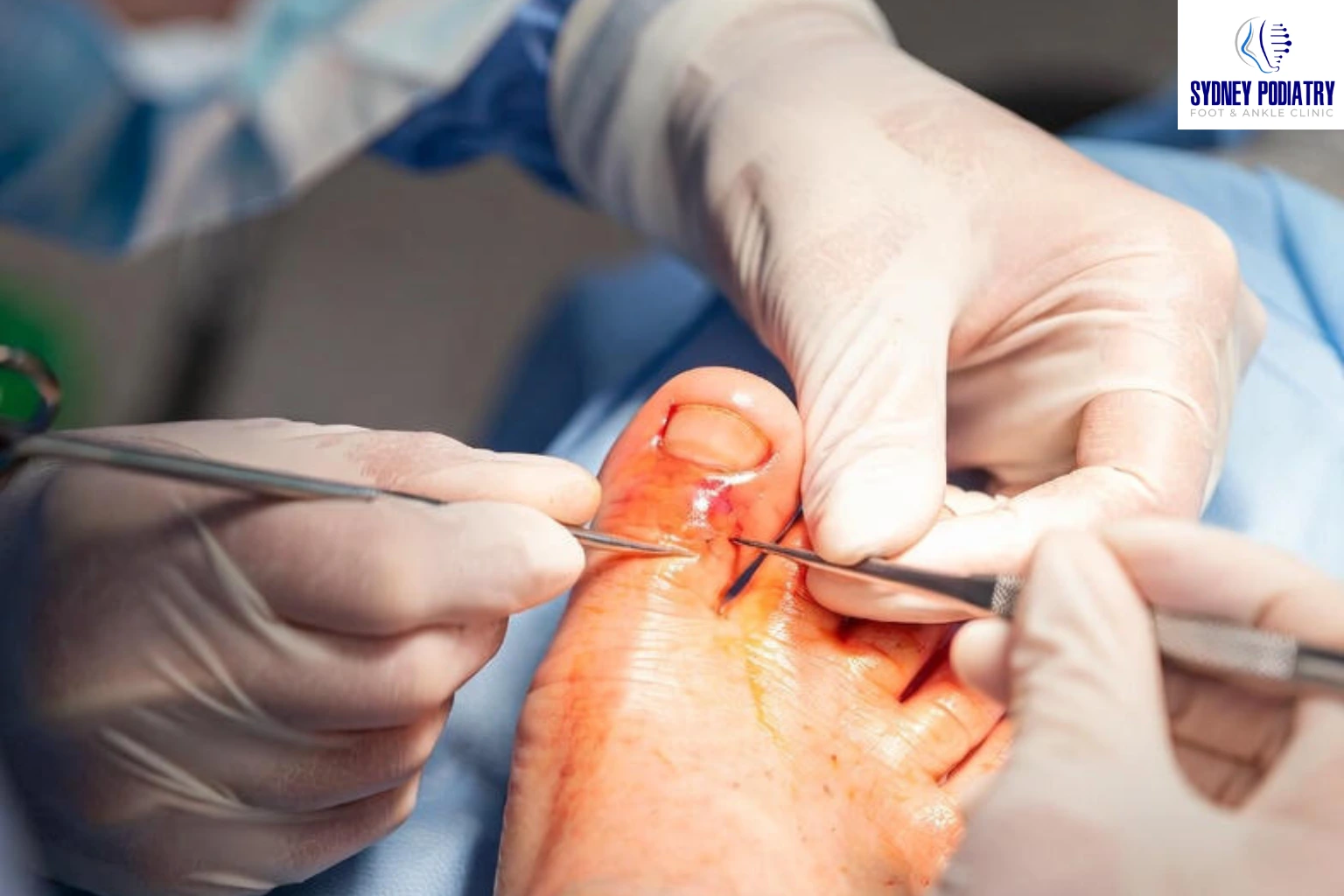
Dealing with an ingrown toenail that keeps coming back is more than just frustrating; it’s genuinely painful. When home care and conservative treatment fail, ingrown toenail surgery is the most effective and permanent solution available.
This guide walks you through everything: how the surgery works, whether it hurts, what recovery looks like, and what it costs here in Australia.
1. What Is Ingrown Toenail Surgery?
Ingrown toenail surgery is a minor, in-clinic procedure performed by a podiatrist to permanently remove the portion of a toenail that is growing into the surrounding skin — a condition medically known as onychocryptosis.
Common causes include:
- Cutting nails too short
- wearing tight footwear
- Naturally curved nail
- Nail injury
When conservative treatments such as nail trimming, taping, or splinting fail to resolve the problem or when ingrown toenails keep recurring, surgery offers a long-term fix.
It is a quick and routine procedure, typically completed in under an hour, in a podiatry clinic. No hospital stay required.
2. Types of Ingrown Toenail Surgery
Before your surgery, your podiatrist will assess the condition of your nail and recommend the most suitable procedure. There are two primary types:
Partial Nail Avulsion (PNA)
This is the most commonly performed surgery for ingrown toenails. Only the problematic nail edge is removed, leaving the rest of the nail intact. The result looks natural, and the procedure carries a success rate of around 98.5%.
Total Nail Avulsion (TNA)
This procedure removes the entire nail. This is reserved for severe cases where the nail is heavily damaged or deformed and PNA alone wouldn’t prevent recurrence.
Both are performed under local anaesthetic: you’re awake, but the toe is completely numb.
3. How Is Ingrown Toenail Surgery Performed?
The most clinically proven approach is Partial Nail Avulsion with Phenolisation. Here’s what the procedure looks like, step by step:
Step 1: Local Anaesthetic Administration
The podiatrist injects a local anaesthetic into the base of the toe to numb it completely. For patients with needle anxiety, needle-free delivery systems are available at many clinics.
Step 2: Tourniquet Application
A small tourniquet is placed around the toe to temporarily restrict blood flow, improving visibility and making the phenol more effective.
Step 3: Nail Edge Removal
The podiatrist makes a precise cut through the nail to separate the problematic edge from the nail plate, which is then lifted out along with any buried nail fragments.
Step 4: Nail Matrix Phenolisation
Phenol (a mild acid, TGA-approved for this use in Australia) is applied to the nail matrix in 3 short applications, destroying the cells that would regrow the removed section. The area is flushed clean afterwards.
Step 5: Dressing
The tourniquet is removed, antibiotic ointment is applied, and the toe is dressed. The full procedure takes 45 to 60 minutes.
4. Does Ingrown Toenail Surgery Hurt?
This is the question most people ask first. Does ingrown toenail surgery hurt? Is ingrown toenail surgery painful?
The short answer is: during the procedure, no, it should not hurt at all.
The local anaesthetic fully numbs the toe before anything begins. You may feel some pressure or movement, but no sharp pain. After the procedure, once the anaesthetic wears off (usually a few hours later), some mild soreness and throbbing are normal. This is easily managed with paracetamol.
Good news is that PNA with phenolisation has notably lower post-operative pain compared to older surgical techniques. However, if you experience severe or escalating pain after surgery, contact your podiatrist promptly, as this could signal an infection.
5. When Is Ingrown Toenail Surgery Necessary?
While not every ingrown toenail requires surgery, it is recommended when:
- The ingrown toenail keeps recurring despite repeated conservative treatment
- A moderate or severe infection is present
- The pain is affecting your daily life, footwear, and work
- The nail is structurally damaged in a way that non-surgical options can’t fix
Surgery is generally not recommended if you’re:
- Pregnant or breastfeeding
- Allergic to local anaesthetic
- Experiencing a severe, untreated infection
- Living with poor blood circulation in the feet
6. Ingrown Toenail Surgery Recovery Timeline
Recovery from ingrown toenail surgery is surprisingly one of the more manageable parts of the process.
Day 1 – Surgery Day
You can walk out of the clinic on the same day. Rest at home with your foot elevated. Light bleeding through the dressing is normal; simply apply another dressing over the first and continue resting. Avoid driving due to the local anaesthetic.
Days 2–3 – First Follow-Up
The podiatrist will remove the dressing, clean the toe, apply fresh dressings, and check for infection. Most patients can return to work at this point. Wear open-toed shoes for the first week.
Weeks 1–2 – Ongoing Healing
Continue daily dressing changes. Keep the toe clean and dry. Avoid tight shoes, heavy lifting, gym work, or any activity that puts significant pressure on the toes.
Weeks 2–4 – Resuming Activity
Strenuous exercise and weight-bearing activity can typically resume after two to three weeks. The surgical site continues to heal beneath the surface.
Weeks 4–6 – Full Recovery
Complete healing generally takes four to six weeks, and sometimes longer for patients with a pre-existing infection or those with diabetes or circulatory conditions.
7. Risks and Possible Complications
Ingrown toenail surgery is safe and highly effective, but as with any procedure, there are some small risks:
Post-operative infection
It is the most common complication, especially if an infection was present before surgery. Managable with oral antibiotics.
Nail regrowth
Occurs in about 1–2% of cases when phenol doesn’t fully destroy the matrix. The procedure can be repeated if needed.
Nail appearance changes
The nail will be slightly narrower after PNA. Barely noticeable on the big toe; may be more visible on smaller toes.
Phenol sensitivity
It is rare but worth discussing with your podiatrist if you have any known sensitivities or special health circumstances.
8. How Much Does Ingrown Toenail Surgery Cost in Australia?
The cost varies depending on the clinic, the number of toes being treated, and whether one or both nail edges are involved.
Here are typical price ranges across Sydney and major Australian cities:
Procedure | Approx. Cost |
Partial Nail Avulsion – one side, one toe | $400 – $600 |
Partial Nail Avulsion – both sides, one toe | $500 – $700 |
Total Nail Avulsion – one toe | $500 – $600 |
Two toes (same appointment) | $500 – $900+ |
These fees generally include local anaesthetic, dressings, and follow-up appointments.
Medicare
Standard podiatry nail surgery isn’t covered under a regular Medicare consultation. However, patients enrolled in a GP-managed Chronic Disease Management (CDM) plan may receive a partial rebate of approximately $61.80. Ask your GP if you qualify.
Private Health Insurance
Most extras policies cover podiatry nail surgery. Contact your insurer with the relevant item codes (546 for PNA one side, 547 for TNA, 548 for both sides of the same toe) to confirm your entitlements before booking.
Key Takeaways:
What it is: A minor in-clinic procedure to permanently remove the nail edge causing the problem.
Types: PNA (most common) removes one edge; TNA removes the entire nail for severe cases.
How it’s done: Local anaesthetic → nail removal → phenol application → dressing. Done in under an hour.
Does it hurt? Not during. Mild soreness afterwards is normal and manageable with paracetamol.
Who needs it: Those with recurring, infected, or debilitating ingrown toenails.
Recovery: Walk out the same day. Return to work in 48 hours. Full healing in 4–6 weeks.
Cost: $400–$700 per toe, with possible rebates through private health insurance and Medicare.
Success rate: Approximately 98–98.5% with PNA and phenolisation.
Expert Ingrown Toenail Surgery in Sydney
At Sydney Podiatry, our podiatrists perform ingrown toenail surgery in a calm, professional setting with a focus on comfort and long-term results. Whether it’s your first ingrown toenail or a recurring problem you’ve been managing for years, we’re here to help you find a permanent solution.
