
The short answer
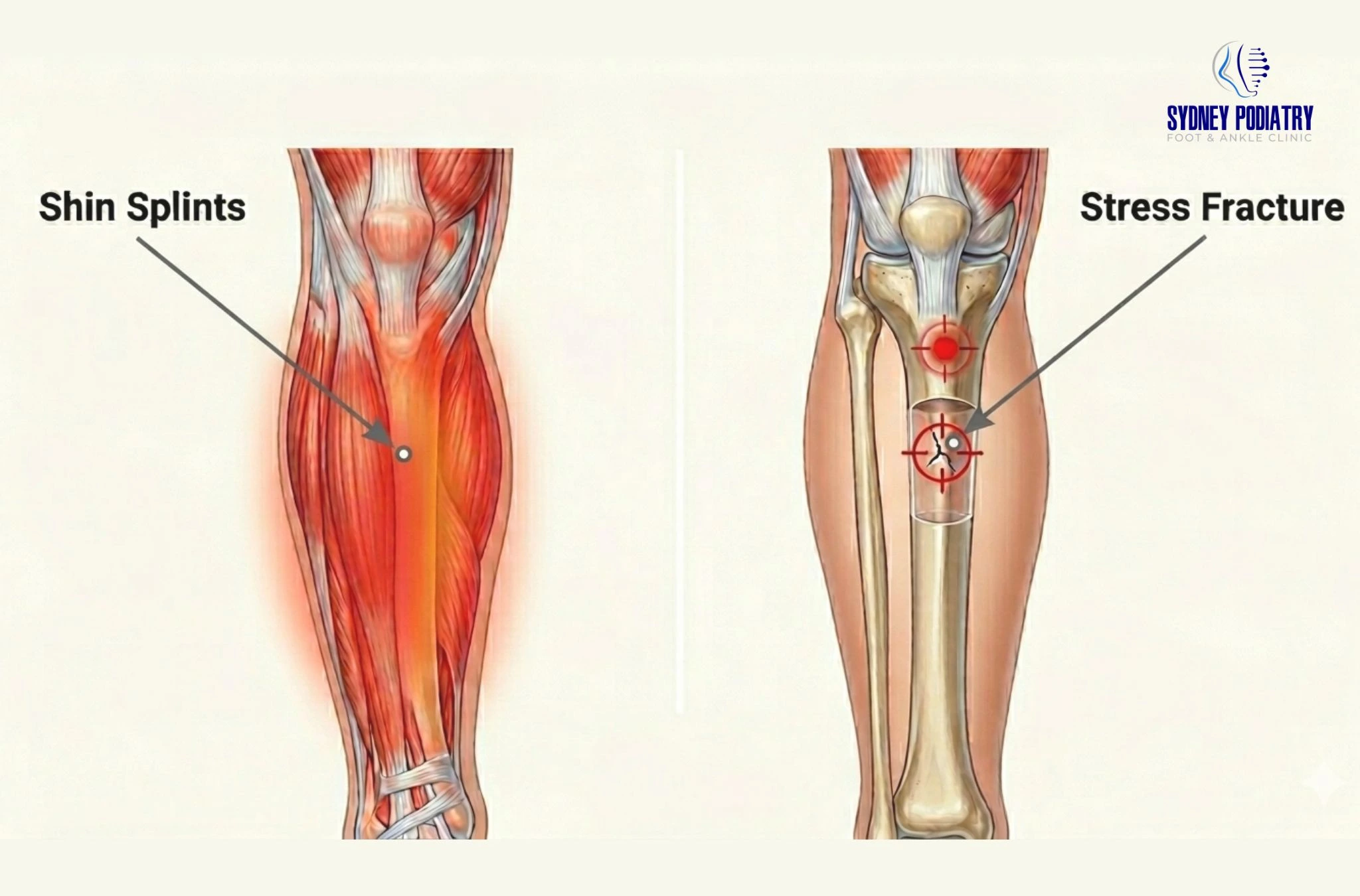
Shin splints cause a dull, widespread ache along the shin that improves with rest. A stress fracture causes sharp, pinpoint pain that worsens over time and may hurt even while walking or resting.
Both look similar early on, which is exactly why understanding the difference matters.
Why Does Shin Pain Occur?
The shin bone (tibia) absorbs enormous impact every time your foot hits the ground. Running, jumping, sport, or prolonged walking can place repeated stress on the muscles, tendons, and bones of the lower leg.
When that stress becomes too much, the body reacts in two distinct ways: either the surrounding soft tissue becomes irritated (shin splints), or the bone itself develops a tiny crack (stress fracture).
The severity and treatment approach for each are very different.
Shin Splints vs Stress Fracture: Spot The Differences
| Feature | Shin Splints | Stress Fracture |
| Pain Type | Dull, aching | Sharp, focused |
| Pain Area | Larger area along the shin | One specific point |
| Onset | Gradual | Gradual but worsens steadily |
| Pain During Activity | May improve as you warm up | Usually worsens |
| Pain at Rest | Rare | Common in more advanced cases |
| Tenderness | Broad tenderness along the shin | Pinpoint tenderness with one finger |
| Swelling | Mild | More noticeable |
| One or Both Legs | Often affects both legs | Usually affects one leg |
| Bone Damage | No crack in the bone | Small crack in the bone |
| X-Ray Findings | Usually does not appear on X-ray | May appear later; early fractures often need an MRI |
| Recovery Time | Typically 2–8 weeks | Usually 6–12+ weeks |
What Are Shin Splints?
Shin splints, medically called medial tibial stress syndrome (MTSS), refer to irritation and inflammation of the muscles, tendons, and bone tissue along the inner edge of the shin bone (tibia).
Extremely common in:
- Runners and joggers
- Football and basketball players
- Dancers
- Military recruits
- People returning to exercise after a break
Common Symptoms of Shin Splints
People experiencing shin splints may notice:
- Dull, aching pain spread over a wider area
- Both legs may be affected
- Pain eases temporarily after warming up
- Settles well with rest
- Tenderness is not pinpoint
- Mild or no visible swelling
In many cases, the pain starts during exercise and eases afterwards. However, if ignored at this point, symptoms may become more persistent.
What Is a Stress Fracture?
A stress fracture is a small crack in a bone caused by repetitive stress or loading without enough recovery time. The tibia is one of the most commonly affected bones because it bears so much impact.
More common in:
- Distance runners increasing their mileage quickly
- Athletes in high-impact sports
- People with low bone density
- Those with poor nutrition or low calcium
- Female athletes (higher risk)
Common Symptoms of a Stress Fracture
Symptoms often include:
- Sharp, deep pain at one exact spot
- Usually affects one leg only
- Pain worsens consistently with activity
- May hurt at night or even at rest
- Tenderness pinpointed with one finger
- Noticeable swelling over the site
The key difference between stress fracture vs shin splints is that stress fracture pain progressively worsens with continued activity.
What Causes Shin Splints and Stress Fractures?
Although the two injuries differ in severity, many of their causes and risk factors overlap.
Common Causes Include
- Sudden increase in training volume or intensity
- Running on hard or uneven surfaces
- Worn-out or poorly supportive footwear
- Inadequate rest and recovery time
- Weak lower leg or calf muscles
- Flat feet or abnormal foot mechanics
- Tight calves or Achilles tendons
- Poor nutrition or low calcium intake
- Low bone density
- Rapid return to exercise after a break
Can Shin Splints Turn Into a Stress Fracture?
Yes, shin splints can turn into a stress fracture if you repeatedly push through persistent shin pain without resting or modifying your activity. This ongoing impact may eventually convert what began as tissue inflammation into a true stress fracture.
This is why early assessment is important.
How Are Shin Splints and Stress Fractures Diagnosed?
A proper diagnosis often involves a physical examination and imaging.
Clinical Assessment
A podiatrist may assess:
- Location and behaviour of pain
- Walking pattern and gait analysis
- Foot posture evaluation
- Point tenderness testing
- Range of movement
- Full training history review
Imaging Tests
Depending on the symptoms, imaging may include:
- X-rays (to rule out fracture)
- MRI scan (most reliable for early stress fractures)
- Bone scan (if MRI unavailable)
Do Shin Splints Show Up on an X-Ray?
Usually, no.
Shin splints affect soft tissue, not bone, so X-rays are mainly used to rule out stress fractures. Even early stress fractures may also fail to appear on standard X-rays, which is why MRI is often the gold standard for accurate diagnosis.
Best Treatment for Shin Splints
Treatment focuses on reducing load, controlling inflammation, and correcting contributing factors.
Shin Splints Treatment Approaches
- Rest from aggravating activities
- Ice therapy to manage inflammation
- Calf stretching and mobility work
- Strength exercises for the lower leg
- Footwear assessment
- Custom orthotics if needed
- Gradual, structured return to activity
- Training load modification
How Are Stress Fractures Treated?
Because the bone needs time to heal, treatment is more restrictive.
Stress Fracture Treatment May Include
- Complete rest from all impact activity
- Moon boot or protective footwear
- Crutches in more severe cases
- Progressive rehabilitation programme
- Nutritional assessment (calcium, Vit D)
- Bone density evaluation, if needed
- Carefully planned return to sport
How Long Do Shin Splints and Stress Fractures Take to Heal?
One major difference between shin splints vs stress fracture is the amount of recovery time required. Stress fractures demand far more protection and rest.
Typical Recovery Timeline
| Mild shin splints | 2–4 weeksRest, ice, calf stretching, footwear check, gradual return |
| Moderate shin splints | 4–8 weeksLoad management, strength rehabilitation, and orthotics assessment |
| Stress fractures | 6–12+ weeksComplete rest, moon boot or crutches, progressive return to sport |
Preventing Shin Splints and Stress Fractures
Helpful Prevention Strategies
- Increase training by no more than 10% per week
- Replace worn-out shoes
- Strengthen calf, ankle, and foot muscles
- Address flat feet or gait problems early
- Allow proper recovery time
- Cross-train with low-impact exercise
- Listen to early warning signs and act on them
Listening to early warning signs is critical when managing shin splints vs stress fracture risk.
When Should You See a Podiatrist?
You should seek professional assessment if:
- Pain lasts longer than a few weeks
- Pain is very localised to one spot
- Pain that causes limping or prevents normal activity
- Swelling is increasing over time
- Symptoms keep returning after rest
- Rest alone is no longer helping
- You’re unsure which injury you have
Still Not Sure Whether You Have Shin Splints or a Stress Fracture?
If you are experiencing ongoing shin, foot, or lower leg pain, the team at Sydney Podiatry can help assess the cause and guide your recovery. Whether you are a runner, an athlete, or simply trying to stay active without pain, our experienced Sports Podiatrists in Sydney provide tailored care for sports injuries, overuse conditions, and lower-limb concerns.
