
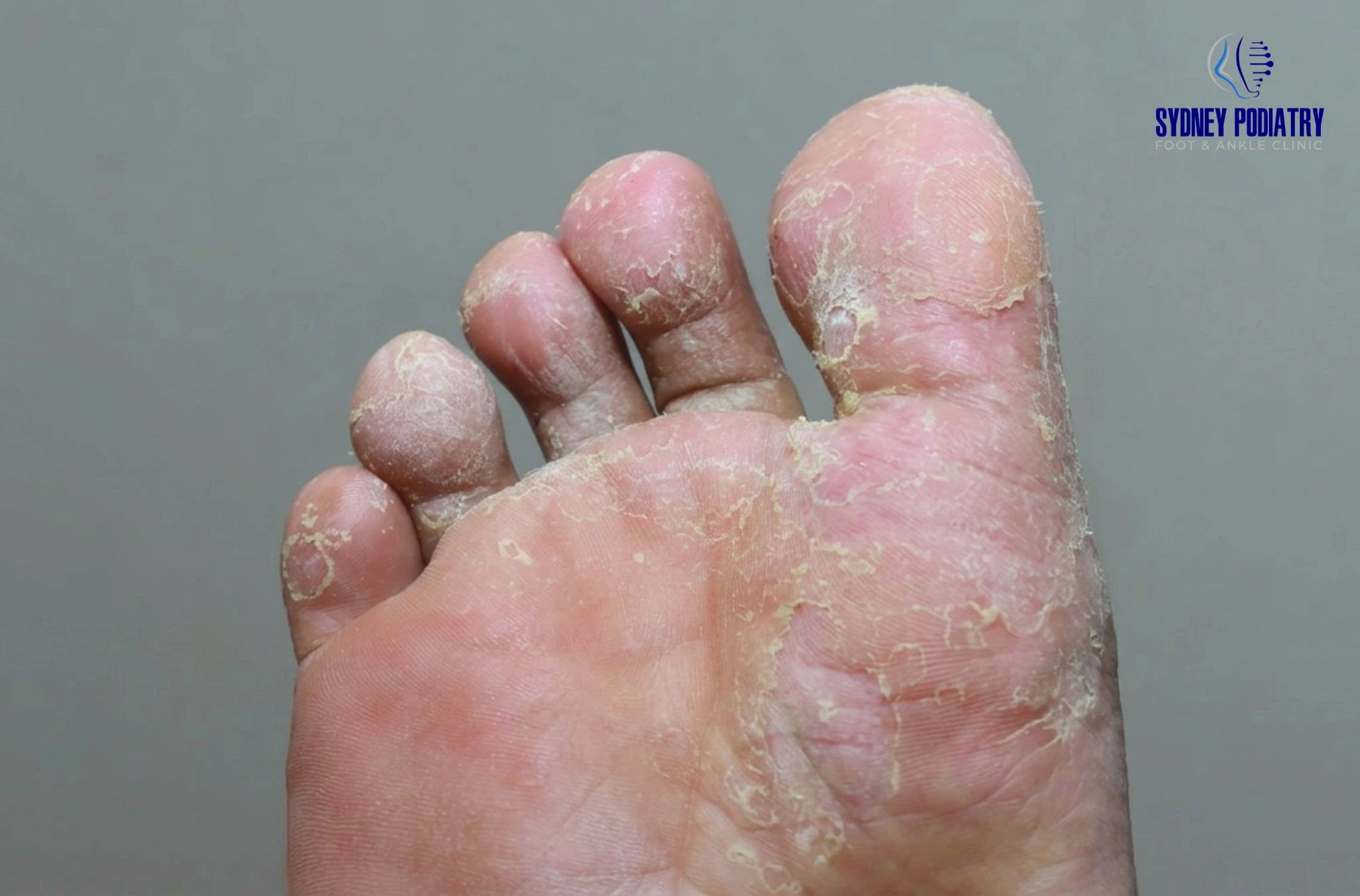
Tinea pedis, commonly called athlete’s foot, is a contagious fungal skin infection on the feet. It is caused by dermatophyte fungi that thrive in warm, moist environments and spread through direct skin contact or contaminated surfaces. Athlete’s foot treatment involves over-the-counter antifungals or oral medication, and keeping feet dry.
Without consistent hygiene habits, it often comes back, but a few simple steps can stop it from returning. Read to know more.
What Is an Athlete’s Foot?
Athlete’s foot is a fungal skin infection caused by dermatophytes, a group of microscopic fungi that feed on keratin in your skin and nails.
The medical name is Tinea pedis. “Tinea” refers to fungal skin infections, and “pedis” is Latin for foot.
The infection commonly appears:
- Between the toes
- On the soles
- Around the heels
- Along the sides of the feet
- Occasionally, in the toenails
Athlete’s foot shows up in a few different ways, each with slightly different symptoms:
1. Toe web infection: the most common type, usually between the fourth and fifth toes. The skin whitens, cracks, and peels.
2. Moccasin-type infection: affects the soles, heels, and edges of the foot. The skin becomes thickened, dry, and scaly over time, almost like a callus.
3. Vesicular infection: marked by fluid-filled blisters that can appear on the arch or sole.
4. Ulcerative infection: the rarest and most serious form, where open sores develop between the toes or on the sole.
What Causes Athlete’s Foot and Who Gets It?
Fungi need two things to grow: warmth and moisture. Shoes provide both. That is why this infection is so common, and why it is not just a “athletic person” problem; anyone can get it.
Common triggers include:
- Walking barefoot in public showers, pools, or locker rooms
- Wearing tight or non-breathable shoes
- Sweaty feet (hyperhidrosis)
- Wearing damp socks for long periods
- Sharing towels, socks, or footwear
- Poorly ventilated shoes
- Existing fungal toenail infections
People with diabetes, circulation problems, or weakened immune systems may also be more prone to infection.
Common Symptoms to Watch for
Athlete’s foot symptoms can range from mild irritation to painful cracking. The most common signs include:
- Itching between the toes or on the soles
- Burning or stinging skin
- Dry, flaky, or peeling skin
- Redness and irritation
- Cracked skin that may sting or bleed
- Small blisters
- Unpleasant foot odour
- Thickened or discoloured toenails
Athlete’s Foot Treatment: What Actually Works
The good news is that most cases improve quickly with the right treatment, if used correctly and consistently.
Over-the-Counter Antifungals
For mild to moderate infections, antifungal creams, sprays, or powders are usually effective.
Common antifungal ingredients include:
- Terbinafine
- Clotrimazole
- Miconazole
- Tolnaftate
Apply as directed and continue treatment for 1–2 weeks after symptoms clear to remove the fungus completely.
Prescription Treatment
If the infection spreads, keeps returning, or affects the toenails, a podiatrist may prescribe stronger topical products or oral antifungals such as terbinafine or itraconazole. Oral antifungal medication is often more effective for deeper or nail-related infections.
Daily Care During Recovery
Medication alone is not enough if moisture remains trapped around the feet. To support healing:
- Keep feet clean and completely dry between the toes
- Wear fresh cotton or moisture-wicking socks
- Let shoes air out fully between wears
A common mistake to avoid: people treat the symptoms, feel better after a few days, and stop. The fungus is still present. Finishing the full course, even when the skin looks clear, is essential to fully eradicate the infection.
Do Natural Remedies Work?
Tea tree oil, diluted apple cider vinegar, and garlic have some antifungal properties, and many people try them for mild cases. They may offer limited relief, but there is no strong clinical evidence that they eliminate the infection as effectively as antifungal medications.
Note: Use them as complementary care, not as a replacement for proven treatment.
Does an Athlete’s Foot Go Away on Its Own?
Usually not.
Without treatment, the fungus often spreads and may eventually affect the toenails, which are much harder to treat. Early care is the best way to avoid long-term problems.
How to Prevent Athlete’s Foot from Coming Back?
Recurrence is very common because fungal spores can survive in shoes, towels, and damp surfaces. Prevention is mostly about controlling moisture and avoiding re-exposure.
Simple Prevention Tips
- Dry feet thoroughly after every wash
- Wash your hands after touching affected skin
- Change socks every day
- Wear breathable shoes
- Rotate footwear regularly
- Treat your shoes with antifungal spray or powder
- Use thongs or sandals in public showers
- Avoid sharing towels, socks, or footwear
- Use antifungal powder if your feet sweat a lot
- Wash towels and socks in hot water
- Treat fungal toenail infections early
When Should You See a Podiatrist?
Professional treatment is recommended if:
- Symptoms are severe or painful
- The infection keeps returning
- The infection has spread to your toenails
- Skin becomes swollen, warm, or produces pus
- You have diabetes or poor circulation
- You have blisters or open sores
- Home treatment is not improving the condition
A podiatrist can confirm the diagnosis and recommend the most effective treatment plan.
Struggling with Persistent Foot Problems?
Whether it is a recurring fungal infection, nail concerns, or any other foot and ankle issue, our experienced podiatrists in Sydney are here to help. We provide thorough assessments to identify the underlying cause and create the right treatment plan to help prevent long-term problems.
Is an athlete’s foot contagious?
Yes, it is highly contagious. The fungi spread through direct skin-to-skin contact, shared surfaces, and contaminated objects like towels, socks, and shoes. If left untreated, you can spread it to other parts of your body, such as the hands, groin, and toenails, as well as pass it to others even before you notice any symptoms yourself.
How long does Athlete’s Foot treatment take?
With consistent treatment, most cases improve within a week and clear fully within one to four weeks. More stubborn or widespread infections can take several months to resolve fully.
Can children get tinea pedis?
Yes. While it is more common in adults, children who use public pools, school change rooms, or who share footwear can develop it too.
Why does Athlete’s Foot keep coming back even after treatment?
Usually, because the treatment was stopped too early, shoes were not disinfected, the toenails harbor a residual infection, or ongoing exposure in communal wet areas continues.
