
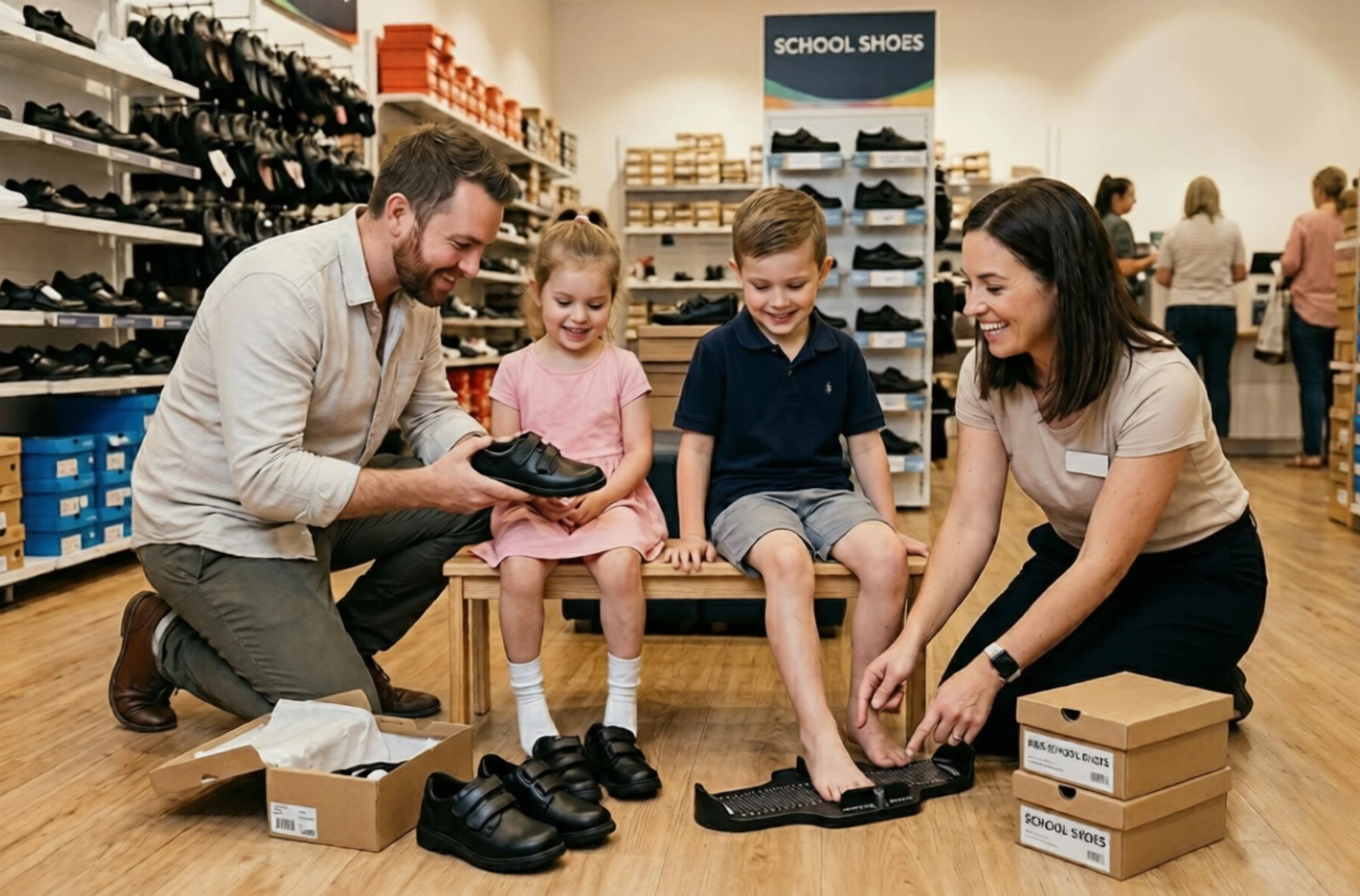
Every year, Australian parents buy new school shoes without realising how important the right fit is for their child’s foot development.
Children’s feet are still growing, with bones, muscles, and arches developing throughout childhood. Poor footwear can lead to discomfort, fatigue, and even long-term movement issues.
This guide explains what to look for when choosing school shoes for growing feet and when professional advice may be helpful.
Why Is Choosing the Right School Shoe So Important?
Children spend many hours each day walking, running, standing, and playing at school, making proper footwear essential.
A well-fitted shoe helps:
- Support natural foot growth
- Improve comfort throughout the school day
- Reduce pressure points and rubbing
- Promote better walking and running mechanics
- Lower the risk of foot, ankle, and leg pain
The right footwear can make a significant difference to a child’s daily comfort and confidence.
What Should Parents Look for in School Shoes?
A Secure Fit:
The shoe should fit comfortably around the heel and midfoot without slipping, there should be enough room at the front for the toes to move freely.
A simple guideline is to leave about a thumb’s width between the longest toe and the end of the shoe.
Firm Heel Support:
The heel counter is the back section of the shoe that surrounds the heel.
A firm heel counter helps stabilise the foot during walking and running. To test it, gently squeeze the back of the shoe. It should feel supportive rather than collapse easily.
Flexible Forefoot:
A good school shoe should bend at the ball of the foot, not through the middle.
This allows natural movement while still providing the structure children need during active school days.
Adjustable Fastenings:
Laces, Velcro straps, or buckles help keep the foot securely positioned inside the shoe.
A shoe that constantly slips can contribute to instability and discomfort.
Durable Sole with Grip:
Children move constantly throughout the day. A quality sole with good traction can help reduce slips and provide better stability across different surfaces.
How Often Should School Shoes Be Replaced?
Children’s feet can grow rapidly, so shoes that fit perfectly at the beginning of the year may no longer be suitable a few months later.
As a general rule:
- Check shoe fit every 3–4 months
- Replace shoes when they become tight
- Replace shoes when the sole is excessively worn
- Replace shoes if they lose their structure and support
Should You Buy School Shoes a Size Bigger?
While it can be tempting to buy larger shoes to allow for growth, oversized shoes can affect comfort, stability, and walking mechanics.
Oversized shoes may cause:
- Heel slipping
- Increased tripping risk
- Friction and blisters
- Poor foot stability
Instead of buying significantly larger shoes, choose a properly fitted pair with a small amount of room for growth.
Signs the Shoes Don’t Fit Properly
Watch out for signs such as:
- Blisters, redness, or pressure marks
- Complaints of foot, heel, or knee pain
- Unusual walking patterns
- Reluctance to run or participate in sports
- Bruised or damaged toenails
If these signs persist, a podiatry assessment can help identify the cause and ensure your child’s feet are developing and functioning as expected.
What If My Child Has Flat Feet or Foot Pain?
Every child’s feet develop differently. If your child has flat feet, heel pain, frequent tripping, or an unusual walking pattern, footwear alone may not be enough.
A podiatry assessment helps:
- Identify whether your child’s foot development is progressing normally
- Determine if additional support is needed
- Address ongoing foot, ankle, or leg discomfort
- Improve alignment and walking mechanics
- Reduce the risk of minor issues becoming long-term problems
In some cases, custom orthotics for kids may be recommended to provide extra support, improve comfort, and help manage specific foot conditions.
Common Mistakes Parents Make When Buying School Shoes
Avoid these common pitfalls:
- Choosing style over fit
- Buying shoes that are too large
- Passing shoes down between siblings
- Ignoring signs of discomfort
- Waiting too long to replace worn footwear
Every child’s feet are unique, and what works for one child may not be suitable for another.
When to Seek Professional Advice
If your child experiences ongoing foot pain, frequent tripping, unusual shoe wear, or difficulty participating in activities, a podiatry assessment can help identify the underlying cause.
For expert guidance on choosing school shoes for growing feet and managing children’s foot concerns, contact Sydney Podiatry for trusted advice, comprehensive assessments, and personalised care.
