
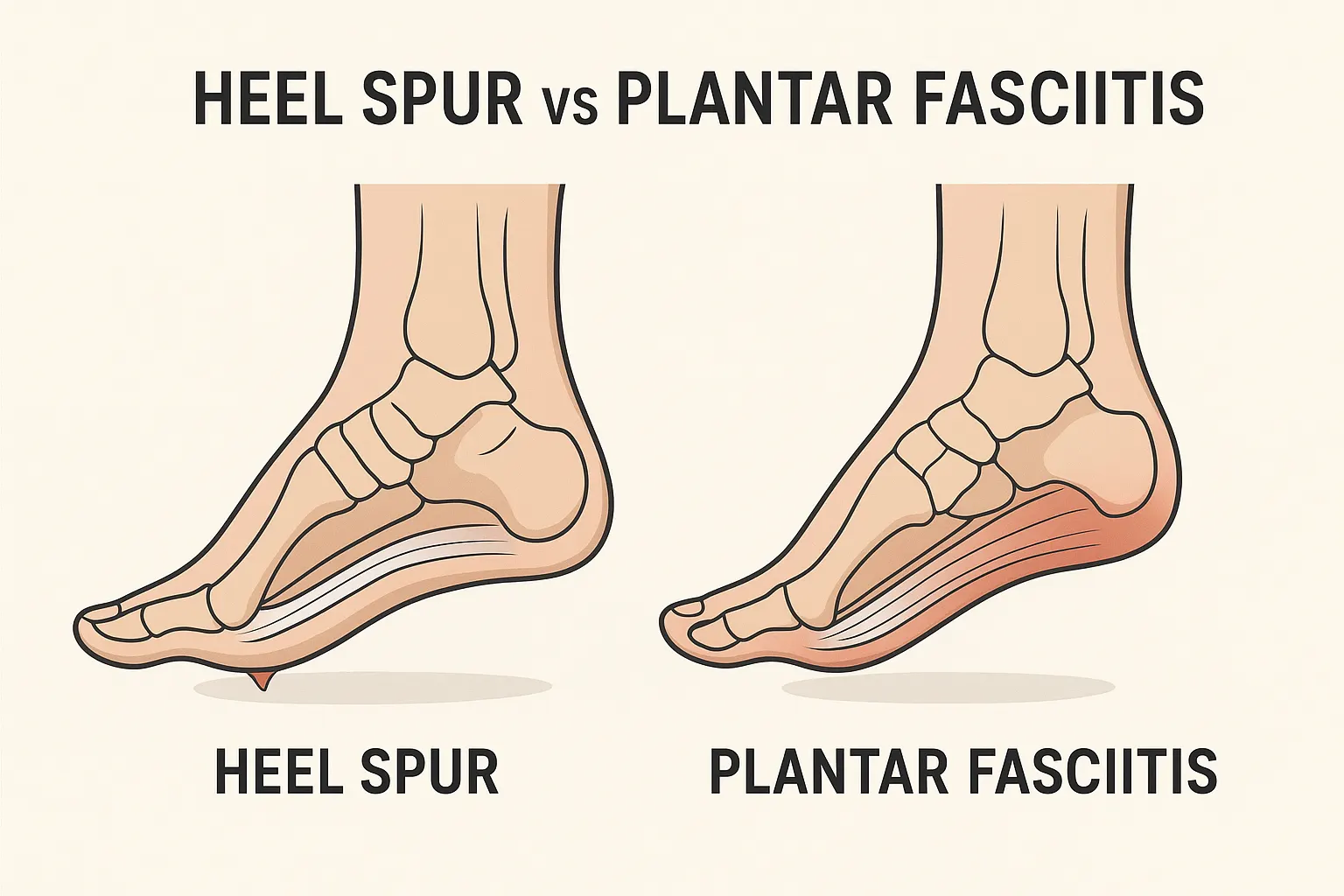
Heel pain is one of the most common foot problems people face, and two conditions often come up in the conversation: heel spurs and plantar fasciitis. Although they can occur together, they are not the same thing. Understanding Heel Spur vs Plantar Fasciitis is the first step towards finding the right diagnosis and getting effective relief.
If you’ve been waking up with sharp heel pain or discomfort after standing for long hours, this guide will help you understand what’s happening in your feet and how to get proper care.
What Is a Heel Spur?
A heel spur is a bony growth that forms underneath the heel bone. It develops over time when the plantar fascia (the band of tissue under your foot) pulls repeatedly on the heel, leading to calcium build-up. Although many people assume that a plantar spur heel must cause severe pain, that’s not always true—many heel spurs are painless and discovered only through X-ray.
Common Heel Spur Symptoms
- A sharp, stabbing pain under the heel when you take your first steps in the morning
- Pain during long periods of walking or standing
- Tenderness at the bottom of the heel
- A feeling like stepping on a small stone
But remember: the spur itself is not always the source of pain. Often, the surrounding soft tissues become irritated, which causes discomfort.
What Is Plantar Fasciitis?
Plantar fasciitis is inflammation of the plantar fascia—the thick tissue that supports the arch of your foot. When this tissue becomes overloaded or overstretched, tiny tears develop, causing irritation and heel pain.
Key Signs of Plantar Fasciitis
- Intense heel pain with the first steps in the morning
- Pain that improves after warming up but returns later in the day
- Discomfort after long periods of standing, running, or walking
- Pain along the arch or bottom of the heel
Plantar fasciitis treatment focuses on reducing inflammation, improving foot mechanics, and restoring normal movement.
Heel Spur vs Plantar Fasciitis: What’s the Real Difference?
Although the conditions are closely linked, they are not the same:
Condition | What It Is | Main Cause | Pain Source |
Heel Spur | A bony growth on the heel | Long-term strain on the plantar fascia | Can be painless; discomfort comes from tissue irritation |
Plantar Fasciitis | Inflammation of the plantar fascia | Overuse, poor footwear, flat feet, high arches | The inflamed fascia itself |
Do Heel Spurs Cause Plantar Fasciitis?
Not exactly. Heel spurs often form because of chronic plantar fasciitis, not the other way around. Many people with plantar fasciitis never develop a spur, and many with a spur never feel pain. This is why proper assessment by a podiatrist is essential.
What Causes Heel Spurs or Plantar Fasciitis?
Several factors increase the risk of both conditions:
- Flat feet or high arches
- Poor or worn-out footwear
- Excessive running, jumping, or long periods of standing
- Sudden increase in physical activity
- Tight calf muscles
- Weight gain adding pressure to the heel
Knowing the cause helps guide the most effective heel pain treatment plan.
How to Tell Which Condition You Have
A podiatrist will assess:
- Your symptoms
- Areas of tenderness
- Foot and arch structure
- Your walking pattern (gait)
- X-ray results (only if needed)
General Clues
- Sharp, localised pain under the heel bone? Could be a spur irritating tissues.
- Pain that eases after warming up but returns later? Likely plantar fasciitis.
- Pain after long periods of rest? Common in both conditions but more pronounced in plantar fasciitis.
A proper diagnosis ensures you don’t waste time on the wrong treatment.
Effective Treatment Options for Heel Spurs and Plantar Fasciitis
The good news? Most people recover with conservative care—no surgery needed.
1. Footwear and Orthotics
Supportive shoes with cushioning reduce pressure on the heel. Custom orthotics help correct foot mechanics and minimise strain on the plantar fascia.
2. Stretching and Strengthening
Daily exercises for the calves and plantar fascia reduce tension and speed up healing. Simple routines, such as towel stretches and calf stretches, make a noticeable difference.
3. Ice Therapy
Applying ice to the heel helps reduce inflammation, especially after activity.
4. Strapping or Taping
Taping supports the arch and offloads pressure from the plantar fascia.
5. Shockwave Therapy
A popular, non-invasive option that stimulates tissue repair and reduces pain—very effective for stubborn cases.
6. Anti-inflammatory Measures
Rest, activity modification, and sometimes short-term medication help manage inflammation.
7. Surgery (Only as a Last Resort)
In rare cases, if symptoms persist for more than 12 months despite treatment, surgical options may be considered. Most patients never need surgery.
How to Prevent Heel Pain from Returning
- Wear supportive footwear daily
- Replace old shoes before they lose cushioning
- Maintain a healthy weight to reduce pressure on the heel
- Warm up before exercise and stretch after
- Avoid sudden increases in training intensity
Small changes in routine go a long way in preventing flare-ups.
When to See a Podiatrist
You should seek professional assessment if:
- Heel pain has lasted more than two weeks
- Pain is sharp enough to limit walking
- Home treatments are not improving symptoms
- You suspect either a plantar spur heel or plantar fasciitis
A podiatrist ensures you receive the right diagnosis and a personalised plan, rather than guessing what is causing your pain.
Final Thoughts
Understanding Heel Spur vs Plantar Fasciitis helps you take the right steps toward recovery. While both conditions can cause similar symptoms, their underlying causes differ—and so should their treatment. With the right professional care, supportive footwear, and targeted therapies, most people return to pain-free movement within weeks.
If heel pain is affecting your daily life, early treatment is the best way to prevent long-term problems and get you back on your feet comfortably. You can contact us or book an appointment online at any of our Sydney Podiatry clinics in Double Bay, Drummoyne, and Moree to start your path to recovery today.
