
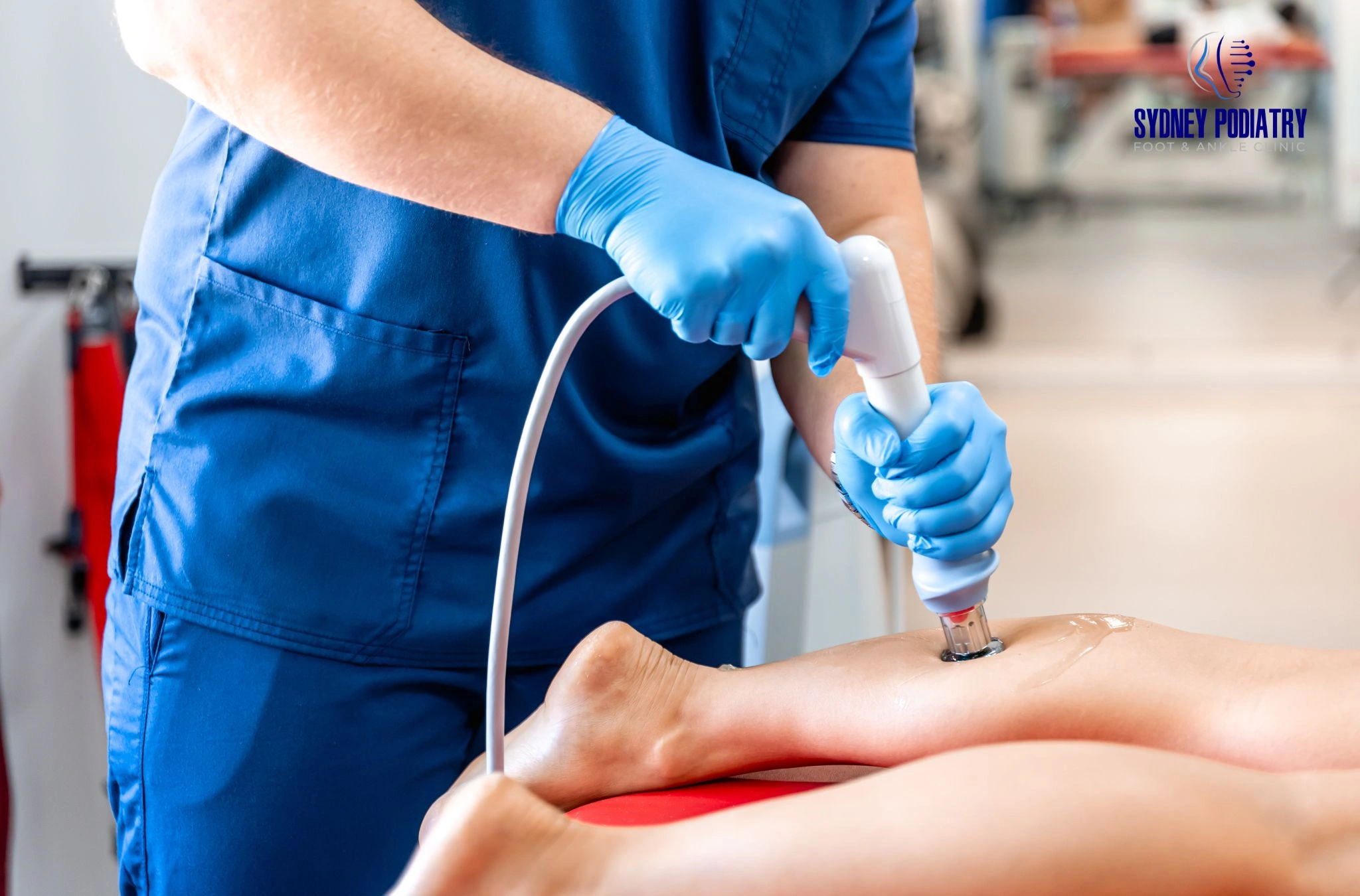
Shockwave Therapy is a non-surgical treatment that delivers high-energy acoustic waves directly into injured or painful tissues to trigger a rapid, natural healing response.
If you’ve been dealing with stubborn heel pain, tendon injuries, or long-term muscle discomfort that won’t go away, you’ve likely come across Shockwave Therapy while searching for solutions. But what exactly does it do? How does it work? And is it right for you?
Let’s break it all down clearly.
What Is Shockwave Therapy?
Shockwave Therapy is also called Extracorporeal Shockwave Therapy (ESWT). It uses sound waves, not electrical shocks, to trigger the body’s natural healing response. These acoustic waves travel into the injured tissue, increasing blood circulation, stimulating cell repair, and helping break down damaged tissue.
It is widely used in musculoskeletal care, especially for chronic conditions that haven’t been responded to rest, medication, or basic physiotherapy.
How Does Shockwave Therapy Work?
The science behind ESWT is surprisingly simple.
When acoustic waves are delivered to an injured area:
- Blood flow increases
- Collagen production improves
- Damaged tissue begins to regenerate
- Pain signals are reduced
- Calcifications may gradually break down
Chronic injuries often occur because the body’s natural healing process slows down. ESWT “restarts” that process by stimulating metabolic activity in the affected tissue.
In simple terms, it encourages your body to heal itself more effectively.
Common Uses of Shockwave Therapy in Foot & Leg Conditions
One of the biggest benefits of shockwave therapy is its versatility. It is commonly used for:
1. Plantar Fasciitis
Persistent heel pain resulting from plantar fascia inflammation.
2. Achilles Tendinopathy
Chronic pain or stiffness in the Achilles tendon.
3. Tennis Elbow (Lateral Epicondylitis)
Pain along the outer elbow due to repetitive strain or overuse.
4. Calcific Shoulder Tendinitis
Calcium deposits cause shoulder pain and restricted movement.
5. Patellar Tendinopathy (Jumper’s Knee)
Knee tendon pain is common in athletes.
6. Shin Splints
Lower leg pain is related to repetitive stress.
7. Chronic Muscle Tightness & Trigger Points
Persistent muscle tightness does not improve with massage alone.
It is especially helpful when symptoms have lasted more than 3 months and traditional treatments haven’t provided relief.
Benefits of Shockwave Therapy
Here are the most important advantages:
Non-Surgical Treatment
No incisions, no hospital stay, and no long recovery period.
Drug-Free Pain Relief
Reduces the need for anti-inflammatory medication or repeated injections.
Stimulates Natural Healing
Rather than masking pain, it promotes tissue repair.
Quick Sessions
Most treatments take 5–15 minutes.
Minimal Downtime
Patients usually return to normal activities the same day.
High Success Rates
Studies report great improvement in cases of chronic tendon and heel pain.
For many people, ESWT becomes the turning point after months of discomfort.
What Happens During the Procedure?
Understanding the procedure helps reduce anxiety.
Here’s what typically happens during a Shockwave Therapy session:
Step 1: Assessment
Your clinician will identify the precise area to be treated through assessment and palpation.
Step 2: Gel Application
A coupling gel is applied to the skin over the treatment zone to ensure the acoustic waves travel efficiently into the body without losing energy.
Step 3: Delivery of Shockwaves
The shockwave applicator is held against the skin and moved over the target area, delivering rapid pulses of sound waves to the painful area.
Note: You may feel tapping sensations or mild discomfort, especially in sensitive areas. However, the intensity can usually be adjusted based on your tolerance level.
The treatment lasts between 5 and 15 minutes, and most treatment plans involve 3 to 6 sessions spaced about one week apart.
How Long Does It Take to See Results?
Many patients notice improvement within 2–3 sessions. However, full results often take several weeks to appear since tissue regeneration takes time.
Because ESWT activates the body’s natural repair process, healing can continue even after your final session.
Is Shockwave Therapy Painful?
Shockwave Therapy may feel slightly uncomfortable during the session, particularly if the area is inflamed. However, it is generally well tolerated, and discomfort reduces as healing progresses.
Post-treatment soreness can occur but usually settles within 24–48 hours.
Is Shockwave Therapy Safe?
Yes, when performed by trained professionals, Shockwave Therapy is considered very safe.
Side effects are generally mild and short-lived, and may include:
- Redness
- Minor swelling
- Temporary soreness
It is generally not recommended for:
- Pregnant individuals
- People with blood-clotting disorders
- Areas with active infection
- Treatment over growth plates in children
A proper assessment is always important before starting treatment.
Does Shockwave Therapy Really Work?
Clinical research supports its effectiveness for chronic tendon conditions, especially plantar fasciitis and Achilles tendinopathy. It is particularly beneficial when pain has persisted for months, and other conservative treatments have failed.
It works best when combined with:
- Strengthening exercises
- Stretching programs
- Footwear advice
- Load management strategies
Shockwave Therapy is not a magic fix, but it can significantly improve outcomes when part of a structured rehabilitation plan.
What Makes It Different from Other Treatments?
| Treatment Type | How It Works | Focus | Recovery Time | Long-Term Benefit |
| Shockwave Therapy | Use acoustic sound waves to stimulate blood flow and trigger natural tissue repair | Addresses the root cause by promoting healing | Minimal downtime; resume normal activities quickly | Encourages long-term tissue regeneration |
| Cortisone Injections | Reduces inflammation through steroid medication | Temporarily decreases pain and inflammation | Short recovery, but repeated use may weaken tissue | Often short-term relief; does not repair tissue damage |
| Surgery | Physically repairs or removes damaged tissue | Structural correction of severe conditions | Extended recovery period; may require rehabilitation | Can provide long-term correction but carries surgical risks |
| Painkillers | Blocks or reduces pain signals | Symptom management | No recovery time needed | Masks symptoms without treating the underlying issue |
Who Is a Good Candidate for Shockwave Therapy?
You may benefit if:
- Your pain has lasted longer than 3 months
- Rest and basic physiotherapy haven’t helped
- You want to avoid surgery
- You are dealing with chronic tendon pain
- Imaging shows degenerative tissue changes
Early intervention can also improve recovery outcomes.
Final Thoughts
Shockwave Therapy has changed how chronic tendon and heel pain are treated. Instead of relying on medication or surgery, it activates the body’s own repair mechanisms.
If you’ve been struggling with long-term pain that refuses to settle, understanding what shockwave therapy is and its real benefits can help you make the right decision.
It is safe, evidence-based, non-invasive, and designed to promote genuine healing. And sometimes, that’s exactly what stubborn injuries need.
Ready to take the next step? Schedule an assessment with a podiatrist to find out if shockwave therapy is right for you.
