
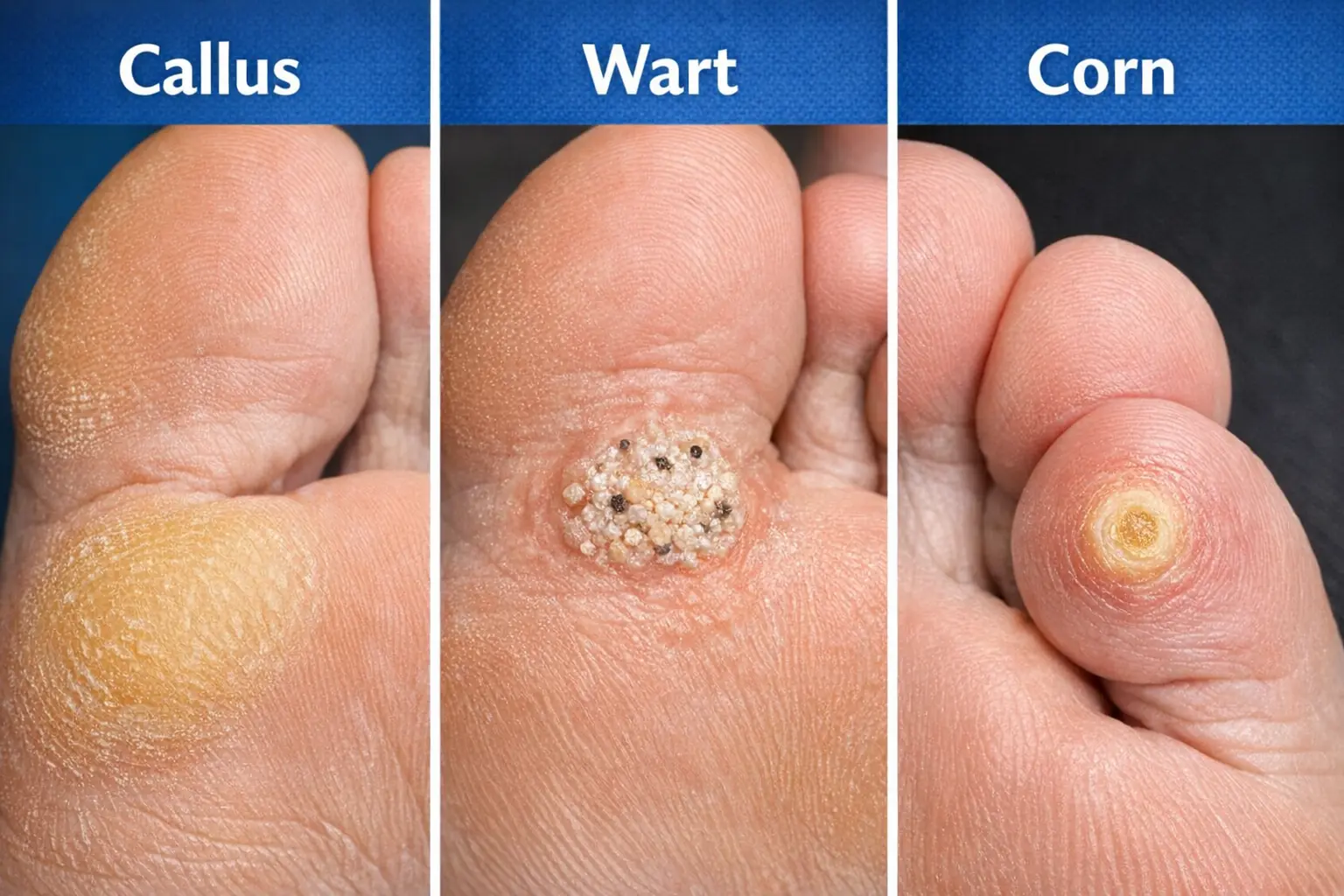
Foot skin problems can look surprisingly similar. A thick patch of skin on your foot might be painless, uncomfortable, or downright painful—but is it a callus, a corn, or a wart? Understanding the difference between callus vs wart vs corn is important because each condition has a different cause, risk, and treatment.
Treating the wrong condition the wrong way can make things worse. This guide explains how to tell them apart, what symptoms to watch for, and what to do next.
Why Calluses, Corns, and Warts Are Often Confused
Calluses, corns, and warts all:
- Appear on pressure-bearing areas of the foot
- Cause thickened skin
- Can be painful when walking
However, the cause, appearance, and treatment approach are very different.
Misidentifying the problem can lead to:
- Ineffective home treatments
- Increased pain
- Spread of infection (in the case of warts)
- Long-term skin damage
Let’s look at each condition clearly.
What Is a Callus?
A callus is a broad area of hardened skin that forms due to repeated pressure or friction. It’s your body’s natural defence mechanism.
Common signs of a callus:
- Thick, rough, dry skin
- Usually painless or mildly uncomfortable
- No clear centre
- Yellowish or grey appearance
- Skin lines remain visible
- Often found on heels, soles, or under the ball of the foot
Calluses are common in people who:
- Walk or stand for long hours
- Wear poorly fitting shoes
- Have foot alignment issues
How do I know if it’s a corn or a callus?
If the skin thickening is spread out and not sharply painful, it’s more likely a callus. Corns tend to be smaller and more intense, especially in tight shoe areas.
What Is a Corn?
A corn is a more focused, compact area of thickened skin caused by constant pressure, often from tight shoes or toe deformities.
Common signs of a corn:
- Small, round, well-defined spot
- Hard centre (core)
- Painful when pressed directly
- Often on toes or between toes
- Can feel like “stepping on a pebble.”
There are two types:
- Hard corns – usually on the top or side of toes
- Soft corns – develop between toes due to moisture
Corn vs wart on foot — key difference:
When comparing corn vs wart on foot, corns are pressure-related, while warts are viral. Corns hurt from pressure; warts often hurt when pinched from the sides.
Also, corns have smooth, defined cores with inflamed surrounding skin. Warts have a rough, cauliflower-like texture with black dots.
What Is a Wart?
A plantar wart is a viral infection caused by the human papillomavirus (HPV) that enters through tiny breaks in the skin. Unlike calluses and corns, warts are infectious.
Common signs of a wart:
- Rough or grainy surface
- Tiny black dots (clotted blood vessels)
- Skin lines are interrupted
- Pain when pinched from the sides
- Can spread to other areas or people
- Can appear singly or in clusters
How to Tell If It’s a Callus or a Wart?
This is one of the most common questions people ask. Here’s a simple test:
The squeeze test: Pinch the area from both sides.
- Wart: Hurts when squeezed from the sides due to nerve endings
- Callus: Tender when pressed down but not with side-to-side pressure
Check the surface:
Warts interrupt normal skin patterns, while calluses do not.
Look for black dots:
Warts may show black dots, while calluses do not.
Can warts cause tingling?
Yes, they can. Some people experience tingling, burning, or sharp pain with plantar warts, especially when the wart grows inward due to pressure from walking. This nerve-like sensation is one reason warts are often mistaken for corns.
Quick Comparison: Callus vs Wart vs Corn
Feature | Callus | Corn | Wart |
Cause | Pressure/friction | Focused pressure | Viral infection |
Pain | Mild or none | Sharp pressure pain | Pinching pain or tingling |
Size | Large & flat | Small & defined | Variable |
Black dots | ❌ | ❌ | ✅ |
Skin lines | Normal | Normal | Interrupted |
Contagious | ❌ | ❌ | ✅ |
Callus vs Wart vs Corn Treatment: What Works for Each
Callus corn wart treatment approaches differ completely because each condition has a unique underlying cause.
Callus treatment: Moisturising, pumice stone exfoliation, proper shoes, and cushioning pads. Podiatrists safely remove thick calluses during routine visits.
Corn treatment: Relieving pressure and removing hardened tissue with sterile instruments for immediate relief. Better shoes, protective pads, and addressing foot structure prevent recurrence.
Wart treatment: Addressing viral infection. Over-the-counter salicylic acid requires consistency. Professional options include cryotherapy, laser therapy, microwave therapy, or surgical removal.
How to Treat Warts on Kids’ Feet
Children commonly get plantar warts from swimming pools, school change rooms, or barefoot play.
Safe wart treatment options for kids include:
- Monitoring small, painless warts (some resolve naturally)
- Avoiding picking or scratching
- Keeping feet clean and dry
- Seeking professional care if the wart spreads, becomes painful, or affects walking
Avoid over-the-counter acids without guidance—children’s skin is more sensitive.
What You Should (and Shouldn’t) Do at Home
Helpful Steps
- Wear properly fitted shoes
- Use cushioned insoles to reduce pressure
- Keep feet clean and dry
- Moisturise dry skin regularly
What to Avoid
- Cutting or shaving thickened skin yourself
- Using acid-based treatments without diagnosis
- Ignoring pain or changes in appearance
When to See a Podiatrist
You should seek professional care if:
- Pain affects walking
- The lesion keeps coming back
- You have diabetes or poor circulation
- Home treatments haven’t worked
- The diagnosis is unclear
A podiatrist can correctly diagnose the issue and provide targeted treatment that actually works.
Final Thoughts
Understanding the difference between callus vs wart vs corn helps you avoid unnecessary pain, prevent complications, and get the right treatment faster. While these conditions may look similar, their causes and treatments are very different—and guessing can delay recovery.
Get Expert Care for Your Feet
If you’re unsure what’s causing discomfort in your feet or need expert treatment for corns, calluses, warts, or other foot concerns, the experienced team at Sydney Podiatry can assess your condition and guide you toward safe, effective care.
Contact us today at our Double Bay, Drummoyne, or Ashfield locations. Your feet carry you every day; let’s give them the attention they deserve.
