
Healthy toenails are essential for balance, comfort, and protection. From walking to running or working, our nails safeguard the tips of our toes and keep us stable. But when nails become ingrown, infected, or damaged, they can quickly turn into a painful issue that impacts your daily life.
At Sydney Podiatry Foot and Ankle Clinic, we specialise in nail surgery and ingrown toenail surgery in Sydney, providing safe, effective, and lasting relief. Whether you’re suffering from ingrown toenails, fungal nail infections, or nail trauma, our experienced podiatrists can restore comfort and confidence in every step.
Nail surgery is a simple, minor procedure designed to treat recurring or severe nail problems that don’t respond to conservative treatments. It’s performed under a local anaesthetic, ensuring you stay completely comfortable and pain-free throughout the process.
Our podiatrists in Sydney perform nail surgery to:
The goal is to eliminate pain, stop infections, and prevent recurrence — all while promoting healthy nail regrowth and faster healing.
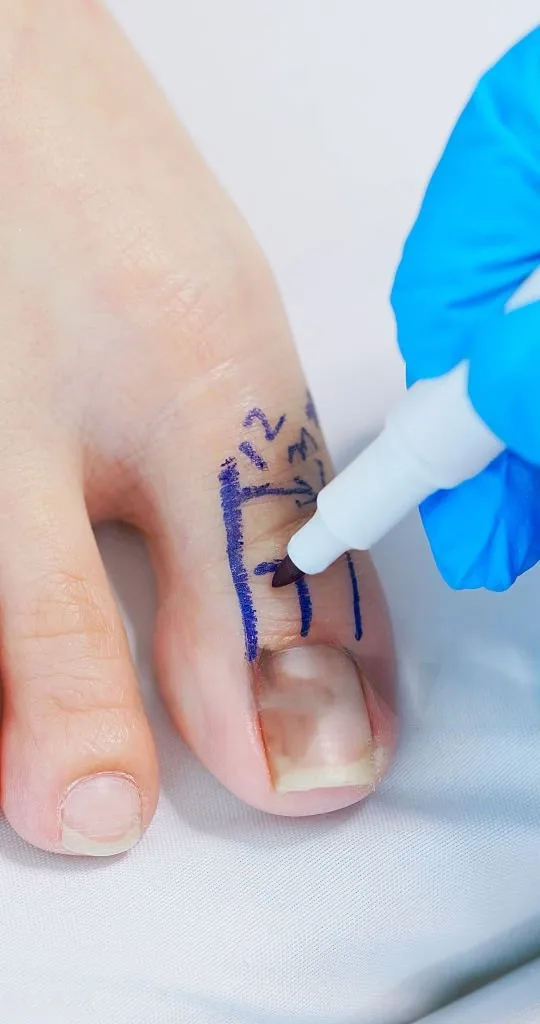
An ingrown toenail occurs when the nail edge grows into the surrounding skin, leading to swelling, pain, and infection. If trimming, padding, or soaking doesn’t fix the problem, ingrown toenail surgery provides a permanent solution by removing the problematic nail edge.
Your podiatrist numbs the toe with a small local anaesthetic injection. You’ll feel a slight sting for a few seconds — then complete comfort for the rest of the procedure.
The toe is cleaned with an antiseptic (such as betadine), and a small tourniquet is applied to keep the area blood-free and clear for the podiatrist.
Using precision podiatry instruments, the affected nail section (PNA) or the entire nail (TNA) is carefully removed.
A gentle chemical called phenol is applied to the nail root to prevent the problematic nail from growing back.
A sterile bandage is applied to protect the area. You’ll receive full aftercare instructions and return the next day for a redressing appointment.
Most patients walk out immediately after the procedure and return to normal activities within days.
Nail surgery is a safe, effective, and long-term solution for recurring or severe nail problems that affect your comfort, mobility, or daily routine. Unlike temporary fixes such as trimming, padding, or antibiotics, nail surgery targets the root cause, providing lasting relief and helping prevent future complications.
Ingrown toenails
Ingrown toenails occur when the nail edge grows into the surrounding skin, leading to pain, redness, swelling, and sometimes infection.
If you’ve tried conservative treatments like salt soaks or trimming with no relief, ingrown toenail surgery in Sydney offers a permanent fix.
During the procedure, your podiatrist carefully removes the ingrown portion of the nail and treats the root to stop it from growing back into the skin. This eliminates recurring pain and infection and allows the area to heal naturally.
Fungal nails
Fungal nail infections (onychomycosis) can cause nails to become thickened, brittle, yellow, or discoloured. In stubborn or painful cases where topical or oral antifungal treatments fail, nail surgery may be the best option.
The procedure safely removes the infected nail, allowing a new, healthy nail to grow in its place. It’s also ideal for those seeking cosmetic improvement when nail appearance is affected.
Damaged or thickened nails (trauma-related)
Repeated trauma from sports, stubbing, or dropping objects on your toes can cause nails to become misshapen, thickened, or split. These damaged nails may press against footwear, causing discomfort or secondary infections.
Surgical nail removal relieves pressure, improves comfort, and allows for healthier nail regrowth. It’s a practical option for those who’ve dealt with chronic pain or shoe discomfort due to trauma-related nail changes.
Recurring nail pain
Constant nail pain can make even simple activities—like walking or wearing shoes—uncomfortable. If pain returns despite regular podiatry care, nail surgery offers long-term relief by removing the source of discomfort.
This helps restore mobility, comfort, and confidence in daily life while preventing recurring inflammation or infection.
Seek urgent podiatry care in Sydney if you notice:
Delaying treatment can lead to complications, especially if you have diabetes or circulation issues.
It’s normal to feel a little nervous before your first nail surgery, but the good news is that the procedure is quick, safe, and virtually pain-free. Our Sydney podiatrists ensure your comfort at every step, so you can feel relaxed knowing exactly what to expect.
Before the procedure, your podiatrist will administer a small injection of local anaesthetic (commonly xylocaine) at the base of your toe. You may feel a brief sting, but once the toe is numb, the surgery is completely pain-free. Some gentle pressure or movement is normal.
Each patient’s dosage is tailored for complete safety and comfort. Your podiatrist reviews your medical history and weight to calculate the ideal amount—usually only 2–4 ml per toe.
Partial Nail Avulsion (PNA): Only the ingrown or damaged section is removed.
Total Nail Avulsion (TNA): The entire nail is removed if it’s badly infected, thickened, or misshapen. Your podiatrist will explain which option is right for you.
After removing the affected section, a mild chemical (phenol) may be applied to the nail bed to prevent regrowth. This reduces recurrence and ensures long-term relief.
The toe is cleaned, disinfected, and dressed with a sterile bandage. The entire process takes 30–45 minutes, and you can walk out the same day. Your podiatrist will provide aftercare instructions and follow-up appointments for smooth healing.
Specialists in nail and ingrown toenail surgery with years of clinical expertise.
Every treatment is tailored to your specific condition for optimal results.
Local anaesthetic ensures a pain-free, stress-free experience.
We use advanced tools and proven methods for long-term, reliable results.
Easy access to our clinics for follow-ups and aftercare support.
Your comfort and confidence are our top priorities. We’re committed to helping you walk pain-free again — starting with healthy, well-cared-for nails.

Wear open-toed shoes (sandals/thongs) to fit the protective bandage.
Eat a light meal beforehand and bring water to stay relaxed.
Pack a phone, tablet, or music to keep calm during the procedure.
Arrange a lift home if needed, especially if you’re feeling nervous.
Comprehensive assessment of your child’s feet, ankles, and gait.
Personalised care for your child's needs, explained in simple terms.
Guidance to reduce risk and support healthy, happy feet.
At Sydney Podiatry Foot and Ankle Clinic, we understand how painful and frustrating ingrown toenails or recurring nail problems can be. Our experienced Sydney podiatrists specialise in safe, gentle, and effective nail surgery to relieve discomfort and prevent infections from returning. Whether you need partial nail removal, permanent ingrown toenail correction, or treatment for chronic nail issues, we’re here to help you walk comfortably again. Book your consultation today at our convenient Double Bay, Drummoyne, or Ashfield clinics and take the first step towards pain-free, healthy nails.
Nail surgery is recommended when a fungal nail infection becomes severe and does not respond to topical treatments or antifungal medications. If the infection is causing significant pain, damage to the nail, or is at risk of spreading, surgery may be needed to remove the infected nail and stop the infection from worsening.
Nail surgery is performed using local anesthesia to numb the area, ensuring that the procedure is pain-free. You may feel some pressure during the surgery, but there should be no pain. After the procedure, any mild discomfort can typically be managed with over-the-counter pain relievers as your nail heals.
Recovery time can vary depending on the extent of the surgery, but most patients can resume daily activities within a few days. It's important to follow the aftercare instructions provided by your specialist to ensure proper healing and avoid infection. Full healing typically takes several weeks, depending on your individual circumstances.
No. Gel polish should be removed before surgery. Clear visibility of the natural nail ensures your podiatrist can perform the procedure safely and reduces the risk of infection.
Acrylic nails also need to be removed prior to surgery. They can interfere with sterilisation, make assessment difficult, and increase the risk of infection.
Aside from a brief sting from the anaesthetic injection, the procedure is pain-free. Once numb, you may feel some pressure or movement, but no pain.
Healing generally takes 4–8 weeks depending on the extent of the surgery and your overall health.
With phenolisation, the risk of regrowth is very low. In rare cases where the nail does regrow, a repeat procedure may be required.